‘As a Deer Longs for Flowing Streams…’

Here in the wondrous mountains of Southern Appalachia, we begin Advent in a state of extreme drought, circled by raging wildfires. We wander a parched land through a haze of smoke, eyes stinging and throats burning. Never before have the psalmist’s words meant so much to me: “As a deer longs for flowing streams, so my soul thirsts for you, O God” (Ps. 42:1).plant-in-rain

We awake every morning anxious to hear the day’s air quality hue: green (go ahead and breathe), yellow (breathe, but do so cautiously), orange (don’t breathe too much if you have heart or respiratory problems), red (take comfort in knowing that breathing is bad for everybody), or purple (consider hibernation). I listen to the regular radio reports but could get the news just as easily from the rooster at the end of our cove. He raises a piercing alarm and crows endlessly whenever we’re shrouded in smoke—the very times he should be saving his breath.   Continue reading

Tearing Down the Walls

On my home altar, among other objects of special meaning to me, is a small chunk of the Berlin Wall. Twenty-seven years ago today, Germans streamed from all over their country with hammers and picks to tear down the oppressive barrier that separated East from West in their capital city. Exuberance and hope demolished that 79-mile, double, reinforced-concrete-and-barbed-wire structure with almost 300 watchtowers.

wall-door

On this day in 2005, I made a pilgrimage to a crumbling remnant of that wall. Candles still burned there in honor of the almost one hundred Germans who had lost their lives trying to climb or tunnel to freedom on the other side. Placed inside cracks in the wall were dozens of individual roses, symbolizing reconciliation and unity. Continue reading

Unoriginal Sin

When I first moved to North Carolina in 1992, I served for a year as a court advocate for survivors of domestic violence. Again and again I watched women gather their courage to take out restraining orders against violent partners—and then go back into abusive situations. Among them was a middle-aged woman whose husband had chained her naked to the doghouse in the backyard one night, and a young one whose boyfriend had raped her with a gun, threatening repeatedly to pull the trigger.national_week_of_action_-_oct_2016

Hearing their stories and witnessing the crumbling of their resolve to leave was heartbreaking. Most had been threatened with death if they tried to escape, and fear is a powerful motivator. So is economic insecurity. One woman explained what I knew was true for many: “I’d rather get beat up than worry about my kids starving on our own.”

That predatory male behavior and sexual assault have erupted in the forefront of our news in October, National Domestic Violence Awareness Month, is a tragic irony. The statistics remain staggering. According to the National Network to End Domestic Violence (NNEDV) and the National Coalition Against Domestic Violence (NCADV), more than 10 million people in the U.S., most of them women, are physically abused by their partners each year. Every nine seconds in this country, a woman is assaulted or beaten. One in five women in the U.S. has been raped. Nationwide, an average of three women are killed every day by those who claim to love them.

Continue reading

Forgetting the Former Things

Twenty years ago today, my friend Tamara Puffer and her husband Michael were driving home from an after-dinner outing for frozen yogurt. When another car slammed into theirs, their lives were profoundly and permanently altered. Tamara spent two weeks in an induced coma, followed by months of rehabilitation, relearning how to walk and speak, read and dress and eat.Tamara

Tamara had recently left her career as a professional violinist and was serving her first church as an ordained Presbyterian pastor. Her theology was deeply shaped by the homeless people she worked with as a volunteer at the Open Door Community in Atlanta. She embraced the Gospel as good news for people on the margins. After her accident, she reflected, “In one life-shattering moment I went from feeling like someone in control—with a clear career path, the privilege of choice, and a measure of power—to being an invisible person on the sidelines, merely trying to cope with each challenge as it came and get through each hour as it unfolded. I wasn’t simply feeling called to ministry among the marginalized. I was the marginalized.” Continue reading

‘Don’t Be a Bystander’: A Tribute to Hedy Epstein

Last Sunday at the memorial service for Hedy Epstein, an old cardboard suitcase lay open on a table in her favorite park in the heart of St. Louis. Inside it, arrayed on her mother’s bright white monogrammed tablecloth, were a few pieces of silverware, the tea set she played with as a little girl, her mother’s elegant beaded purse, her school records and baby pictures. These were the cherished items that Hedy carried out of Germany in May 1939 when she was 14.

Hedy at 14

The Nazi official who oversaw her packing and wired her suitcase shut forbade her from bringing the stamp collection she couldn’t bear to leave behind. Late that night, huddled under the covers of her bed with a flashlight, Hedy took every stamp out of her albums, snuck upstairs, and slipped them one by one through a sliver of an opening into the suitcase.

It was an act of bravery, given what she had witnessed of Nazi power. Her math teacher, one of Adolf Hitler’s paramilitary SS men, had pointed his revolver at her when he asked her questions in class, and stormtroopers had ransacked her home, breaking windows, furniture, and dishes. She had seen Jewish men whipped and marched through the streets, including her father Hugo, who returned from a four-week ordeal in Dachau with his head shaved and his body so swollen from beatings that her mother Ella had to cut his filthy clothes off of him with scissors. Continue reading

Oh, Great

Could we just stop arguing about whether we are, or were, or will be great again? Could we, for the next four months at least, ban the word exceptional from our vocabulary? Could we dispense with superlatives like “the best country in the history of the world”?

Earth

Plenty of countries have universally accessible healthcare and affordable higher education, fairer wages and better parental leave policies, more tolerance and less homelessness and hunger. Lots of cultures are less obsessed with consumerism and competition, and more committed to the common good. America is exceptional in our level of gun violence and our rate of incarceration. And also for the amount of money we throw at preparing for and making war.

Do we need to remind ourselves that this nation was birthed with genocidal policies toward native populations and the enslavement of Africans? That our founding document accorded voice and political power solely to white male property owners and assigned people with dark skin only a fraction of humanity? Continue reading

Nicaragua

The mother, with tears streaming down her cheeks, thrust her baby toward us. “Take him,” she cried in Spanish. “Take him to a place where there is no war.”

9272680133_1be9f6a6b6_m

The year was 1983, and a U.S.-sponsored conflict was tearing Nicaragua apart. I was there as part of the first Witness for Peace team to set up a prayerful, protective, and nonviolent presence in that country’s war zones. We were on a bus from the tiny town of Jalapa, bumping over a rutted, isolated road back toward Managua, with bursts of mortar fire echoing around us.

When July 19 comes around each year, I think of Nicaragua. Two weeks after fireworks explode here from coast to coast to celebrate the success of the American Revolution, Nicaraguans mark the triumph of theirs. Thirty-seven years ago today, they overthrew the Somoza dynasty that had brought repression and ruination to their country for more than four decades.

Continue reading

Coyote Calls

I didn’t sleep well last night. I could say that the violent images and roiling emotions of the week kept me awake, but that would be only partly true. It was the coyotes. It was Saturday night and the coyotes were having a party on the ridge.

15713308475_7848c8635f_c

Bill and I moved into our home tucked into the Blue Ridge Mountains north of Asheville, North Carolina, exactly two years ago. The generous owners of the land next to us give us free access to their 120 acres with pastures, a pine forest, and pond. Trails wind under sheltering canopies of laurel and rhododendron up to a stunning ridgetop view. The first time we climbed to the top and sat reveling in a panorama that gleamed in the rays of a setting sun, I whispered “Coyote.”

“Do you hear one?” Bill asked.

“No. I see one.” She was lean and a surprising beige-yellow color, ambling toward a blackberry thicket and glowing in the golden light of dusk. Continue reading

Guns

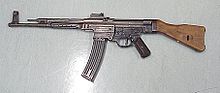
I learned about the power of guns when I was nine years old. I had a red felt cowgirl hat that tightened with a white cord under my chin, a holster made of stamped fake leather, and two toy metal six-shooters. When I waved them around shouting “Bang, bang!” I imagined myself out in The Wild West among the saloon owners and cattle rustlers I saw on TV—someplace like Texas.

I wasn’t at all prepared for the real thing. I’ll never forget the principal of my elementary school, his face stricken, telling us the news from Dallas: “The president has been shot.” He sent us home early, and for days afterward we sat in front of our TV watching the disturbing images over and over: the president slumping over in the motorcade car, Jackie spattered with his blood, Jack Ruby fatally shooting alleged assassin Lee Harvey Oswald, the eerie rider-less horse in the funeral procession.

GunGun 2

I thought then that such shattering violence would be a once-in-a-lifetime occurrence. I didn’t know that one renowned civil rights leader had already been assassinated that year in Mississippi. I couldn’t begin to imagine that within five years two more African-American leaders would also be murdered—along with voting-rights workers and freedom riders and the victims of lynch mobs—and that the brother of the president would also be gunned down by an assassin. Continue reading

Solid Footing

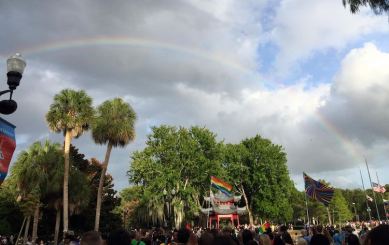
It was a rainbow more spectacularly breathtaking than any I had ever seen. Bill, our dogs Micah and Tasha, and I were taking our nightly twilight walk down our rural mountain road on Friday evening. Emblazoned over us was a complete arc of brilliantly vibrant color against a sky that glowed with electric pink and fuchsia.

We weren’t alone in our awe. At Circle of Mercy two nights later, I discovered that my seven-year-old friend Abby was riding in the car when she saw the rainbow and couldn’t take her eyes off it. “It seems like it’s following us home,” she said to her mother. “Is it solid enough to stand on?”

Orlando-Rainbow-FB-Gino-Iavarone-III

While I stared at it, transfixed, I recalled God’s words to Noah after the great flood: “When the bow is in the clouds, I will see it and remember the everlasting covenant between me and every living creature of all flesh that is on the earth” (Gen. 9:16). I was always taught that the rainbow was a reminder to us of God’s promise. But God was actually saying that it’s a reminder to God never to bring such total devastation to the earth and humanity again. Because surely God must be tempted sometimes to just chalk us all up as a big mistake.

This might be one of those times. Such hatred and fear plague us, such grief assaults us. Continue reading